Professional ghostwriting isn’t like the #CopyPasteCris plagiarism scandal. Author/ghostwriter Shiloh Walker is here to explain the hows and whys of ghosting, for both clients and ghosts.
Pin It
Read More
In the recent scandal known as #CopyPasteCris, Cristiane Serruya plagiarized a lot of books. We’re looking at how it happened and what (if anything) can be done to prevent it from happening again.
Pin It
Read More
As writers, we have to make our characters seem real to readers, but it’s often not easy. So here’s two resources that can help us create characters that seem real.
Pin It
Read More
Sometimes we’ll hear writing advice like “avoid clichés,” but what does that mean when it comes to story tropes? After all, can’t tropes be helpful? And if so, how do we make them less cliché?
Pin It
Read More
Writers need readers to grasp emotional information from non-POV characters, which can be a struggle. Becca Puglisi, co-author of the Emotion Thesaurus shares 6 techniques to avoid the problem.
Pin It
Read More
Plotters might find any kind of pantsing hard to understand, but even pantsers can struggle with pantsing our characters’ development, as that process comes with a different set of problems from developing our plots.
Pin It
Read More
Last week, we talked about discovering the essence of our character, but what about the essence of our story. What makes a story idea the one we want to tell? And why does understanding our story’s essence matter?
Pin It
Read More
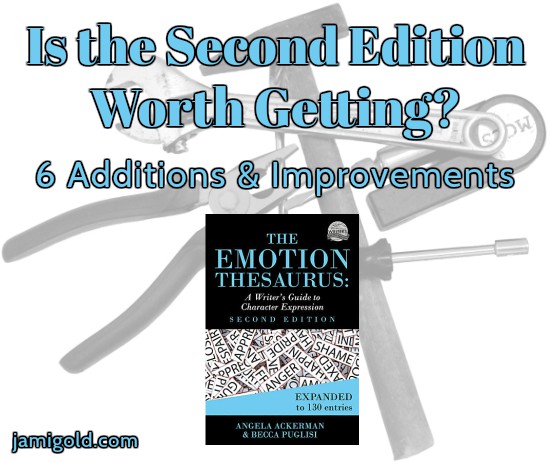
I’ve been helping Angela Ackerman and Becca Puglisi at Writers Helping Writers keep a big secret: The Emotion Thesaurus Second Edition! Angela and Becca have added new responses, new entries, and new writing tips.
Pin It
Read More
Last summer, Amazon announced that CreateSpace was closing and merging with KDP. Now that CS is dead and the migration is over, let’s make sure our books are set up properly at KDP.
Pin It
Read More
A character’s essence is about more than just unique characters, but what is their essence? These 3 perspectives on character essence teach us about our characters.
Pin It
Read More