Do You Belong? Or Are You a Fraud?
How would you complete this sentence? “I’ll know that I’m good enough when…” Dr. Valerie Young, an expert on “impostor syndrome,” shares her insights.
Pin It
Where Normal Need Not Apply
How would you complete this sentence? “I’ll know that I’m good enough when…” Dr. Valerie Young, an expert on “impostor syndrome,” shares her insights.
Pin It
This year at RWA, I was eligible to attend special published-authors-only workshops geared toward those with more experience, and I want to share some of the highlights from those workshops, as I think we can all benefit from many of the insights.
Pin It
If we have multiple story ideas, how do we decide which one we should write next? We want to pick one that we feel strongly enough about that when the going gets hard—and it will—we won’t be tempted by a different shiny idea. So how can we avoid second guessing ourselves?
Pin It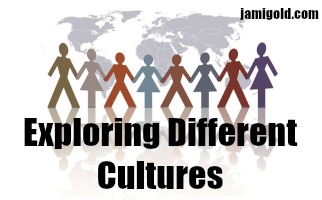
In the quest to come up with unique stories, we’ve probably all explored different situations, characters, and premises. Another way to add more layers of uniqueness to our stories is by exploring different cultures.
Pin It
While we need to learn grammar rules for our writing, if we follow the rules too strictly, we can strangle our voice. Today, Julie Glover shares her tips on four steps to break grammar rules in a good way.
Pin It
A recent article about unlikable heroines pointed out that likability is often more of a problem for female characters than for male characters. While I’ve learned how to minimize those issues with my characters, the problem still rankles me.
Pin It
As writers, we do everything we can to make readers invested in our characters in some way. An invested reader is a happy reader, right?
Well, maybe not. Let’s take a look at the other side of character development.
Writers are often a neurotic, self-doubting lot, and many of us hope for validation as a means of overcoming that doubt. We never want to think about how that validation is only temporary, but the best we can do is try to create a healthy relationship with our validation desires.
Pin It
Whenever we send our work out into the world for feedback, we’re taking a risk. Depending on our levels of self-doubt, the feedback might roll off our back, inspire us to work harder and fix issues, or convince us that we should quit writing. How can we avoid destructive feedback and the temptation to quit?
Pin It
Sometimes as authors, we struggle to create a well-rounded world or characters that feel so real to readers that they experience a movie in their mind. Stories that feel like we can crawl in and inhabit them are often lauded as special, but why is it so hard to succeed in that goal?
Pin It


