Last week, we looked at turning points from the perspective of beat sheets—how to identify them and ensure they’re changing the direction of the story enough to deserve their name. But turning points affect the story in other ways too. Turning points aren’t just about plot twists. (In fact, plot […]
Pin It
Read More
Our stories are filled with scenes where (hopefully) things happen, but only some of those events are turning points and belong on a beat sheet. So how can we identify our story structure?
Pin It
Read More
How were your holidays? Was Santa good to you? I’m still mostly offline, enjoying quality time with my family, so I’m rerunning this post from several years ago. My Christmas couldn’t have been any better, and I hope yours was everything you hoped for too. Of course, whether or not we’re […]
Pin It
Read More
Want to avoid flat, unemotional writing? We have to match our characters’ emotional reactions to the stimulus, whether big or small.
Pin It
Read More
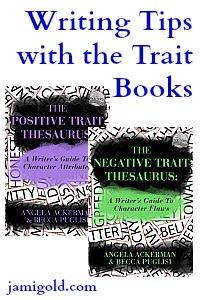
A couple of weeks ago, Becca Puglisi, one of the co-authors of the fantastic Thesaurus books, shared her tips for using the new The Positive Trait Thesaurus and The Negative Trait Thesaurus books. Her advice can help us develop our characters at all stages of planning, drafting, and editing. But the […]
Pin It
Read More
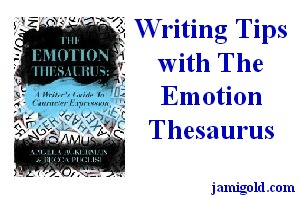
I have a special treat for everyone today! I’ve mentioned many times that I love The Emotion Thesaurus by Angela Ackerman and Becca Puglisi (of The Bookshelf Muse/Writers Helping Writers fame) for expanding my “showing vocabulary” when it comes to character emotions. A few weeks ago, I shared how their new books, The Positive […]
Pin It
Read More
All stories need conflict. As agent Donald Maass says, we need tension on every page. But that doesn’t mean our characters should come to fisticuffs on a regular basis. Instead, conflict refers to whatever stands between our characters and what they want. Why does it take them 300 or so […]
Pin It
Read More
Most tips for creating sympathetic characters point out that our characters need flaws. And that’s very true. But it can be a real trick to show flaws for characters who bottle up their emotions in an attempt to hide their weaknesses. While very common, that defense mechanism can leave very […]
Pin It
Read More
We’re probably all familiar with the idea that poetry, music, and song lyrics can have rhythm. But prose writing—our normal, everyday writing with sentences and paragraphs rather than lines, stanzas, and verses—can have a rhythm too. I’d occasionally heard a rhythm in my head while reading stories but never paid much attention. […]
Pin It
Read More
We’ve probably all heard the advice to “show don’t tell” more times than we can count. Like most advice, it’s worded as an absolute, making it seem as though telling is never okay.
Once we’re experienced, we know that’s not true. Some telling is absolutely okay, and in certain cases, is preferable to showing.
Pin It
Read More