In writing, it’s difficult to balance “not enough” and “too much.” Not enough flaws can make our characters flat, and too many flaws can make our characters unlikable. Some genres can get away with unlikable characters, but for those stories that can’t, here are 3 1/2 tips to fix the problem.
Pin It
Read More
An interesting conversation grew out of Misti Wolanski’s guest post earlier this week. She mentioned that sometimes readers enjoy finding typos. Let’s take a closer look at what that means for readers and for us as authors? Should we leave typos in our work? What say you…
Pin It
Read More
Many writers write both fiction and non-fiction (even if the latter is just blog posts), but the two types of writing require different skills—from authors and from editors. The better we understand the differences, the better we can follow the right rules at the right time and the better we can judge whether an editor is skilled in the right areas to be a good editor for us.
Pin It
Read More
Indie publishing isn’t made up of just one decision to put us on one path. The choice to self-publish is just the first of dozens, maybe hundreds, of decisions we’re going to have to make as part of our indie career. One choice we have to face is how we want to sell our books. There’s no right or wrong answers—only what works best for us.
Pin It
Read More
Some authors are able to write coherent stories while drafting. Others put together words willy-nilly and end up with a story that doesn’t hold together. And still others plot but are just writing their chaos down in advance. For all, a strong sense of story structure would help them during planning, drafting, and/or revisions.
Pin It
Read More
Internal dialogue is rarely discussed but can be the key to a great story. The skillful use of internal dialogue reveals a story’s emotions, characterizations, motivations, and overall arc. Internal dialogue provides context for everything our characters experience, which helps our readers know what the story means to our characters.
Pin It
Read More
My Elements of a Scene Checklist helps us identify whether a scene is truly necessary and contributing to our story by making sure it fulfills a story purpose. The same judgment criteria can apply to subplots as well. Let’s take a look at how can we make sure our tangents and subplots are adding to the story and not acting as a distraction.
Pin It
Read More
I think it’s safe to say that we often doubt ourselves as authors. If we’re not careful, that self-doubt can affect our business decisions. Sometimes we even reject ourselves to prevent rejection from others.
Pin It
Read More
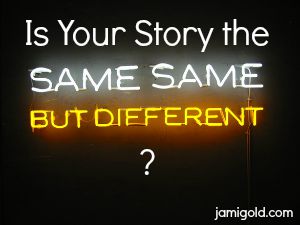
Ever heard “write the same but different”? Usually agents want something similar enough to other stories that they know they can sell the book but different enough to not feel like a retread. Whether we’re writing queries for traditional publishing or back-cover blurbs for self-publishing, if we can identify how our story is unique, we can better sell our story.
Pin It
Read More
Even though I don’t want my blog to turn into “all self-publishing tips all the time,” I also want to share my indie publishing insights and advice. My friend Janice Hardy came up with the perfect solution: joining the Indie Author Series at Fiction University, where I’m writing a series digging into some of our options for indie publishing.
Pin It
Read More