An Authors’ Guide to Creative Commons — Guest: Deborah Makarios
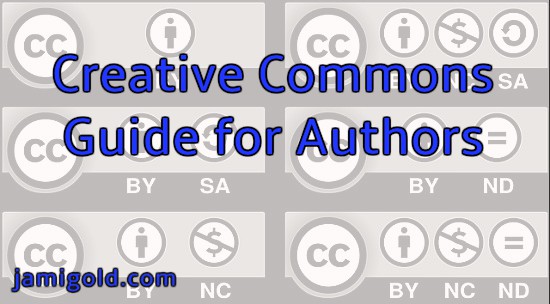
Post-NaNo and editing, how do we want to publish our work? Deborah Makarios shares her insights into what Creative Commons is and how it might apply to authors and our stories.
Pin It
Where Normal Need Not Apply
Post-NaNo and editing, how do we want to publish our work? Deborah Makarios shares her insights into what Creative Commons is and how it might apply to authors and our stories.
Pin It
The antagonist in our story might be a love interest or truly evil or anything in between. When our story requires a villain, we might struggle to avoid clichés. Kassandra Lamb shares her insights into psychopaths, sociopaths, and other bad guys.
Pin It
Have you struggled with writing a synopsis, query, or Amazon book description? Romy Sommer shares her 10 step process for finding the core of our story and writing synopses.
Pin It
Do we need to write a million words before we can master the skills of writing? Maureen Crisp, a judge for a major book award with entries from debut and veteran authors, knows what it takes to be a writing master.
Pin It
Fiction has to make more sense than real life, and logic and consistency are required. Selina J. Eckert shares her advice on how to make sure our fiction rings true through fact-checking.
Pin It
Longer writing—such as stories—can often be easier to write than something shorter, like a synopsis, query, Twitter pitch, or log line. That’s why the skills important in poetry can strengthen our prose writing.
Pin It
The Scrivener drafting programs helps writers track daily word count and hit targets, but it’s not always intuitive. Scrivener expert Gwen Hernandez is sharing her Scrivener tips for NaNoWriMo, including how to compile our draft—one of the trickiest aspects of Scrivener.
Pin It
One the first day of NaNoWriMo, Pacale Kavanagh share insights and advice on how meditation can help our mindfulness to better focus, ignore distractions, and turbocharge our productivity.
Pin It
When faced with the many decisions of writing our story, the best choice is whatever tells the story we want to tell, but what does that mean? Let’s take a look at what storytelling really is and how we can improve our skills.
Pin It
Like many authors, I started writing because I love to read. Of course, there’s no such thing as too many books, so I wanted to share this tool that might help save our wallets.
Pin It


