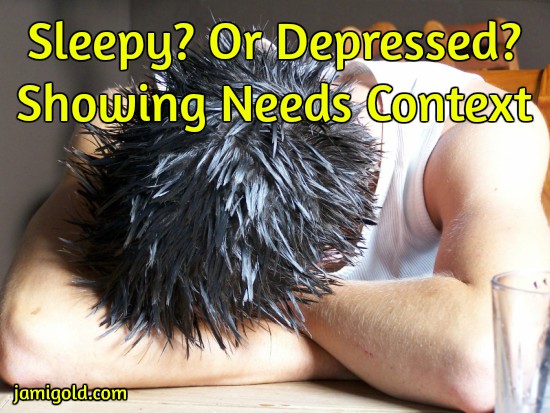
We reveal our story through countless decisions in every scene, and we sometimes know which options seem right for our story. But other times, we might not be sure. In those cases, how do we decide which way to play out a scene?
Pin It
Read More
The implication of the advice to “show, don’t tell” is that showing is “better” than telling when our story actually needs both. Let’s explore what “show, don’t tell” really means when it comes to storytelling.
Pin It
Read More
In the writing world, we often hear the advice to “show, don’t tell.” I’ve mentioned before that telling isn’t bad or something to be avoided at all costs, and a fantastic post by Cecilia Tan points out how the advice can actually be harmful.
Pin It
Read More
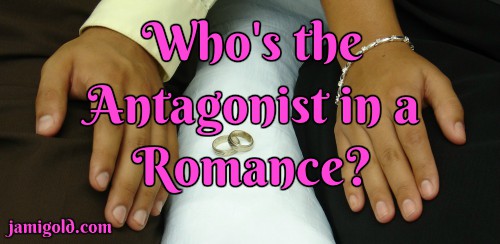
A recent post by Diana Hurwitz explored the nature of antagonists in romance novels. Today, we’re taking a deeper look at our options for antagonists, especially in the romance genre, and how we can avoid creating unhealthy relationships.
Pin It
Read More
Need a beat sheet for a short story? Technically, my beat sheets can be customized for any length story, but let’s take a look at how story structure changes with our story’s length and how beat sheets might need to adjust for short stories.
Pin It
Read More
Recently, a blog reader asked me whether she should worry about her word count while she revised. Her question highlights how a better understanding of the revision process can help our storytelling.
Pin It
Read More
Whether we want to know for real-life purposes or for our writing, Bran’s post today helps us identify elements of healthy romances. Authors need to be careful of sending readers the wrong message. Everyone deserves to be in a healthy, loving relationship—including our characters.
Pin It
Read More
A post by Claire Bradshaw over at Writer’s Edit ties in with our recent topic of plot holes, which can sneak into our character development and worldbuilding. Claire shares tips for finding all types of plot holes, as well as a step-by-step process for how to fix any we find.
Pin It
Read More
It’s time for another post as a Resident Writing Coach over at Writers Helping Writers, and this time we’re talking about plot holes, especially the kind that sneak into our stories.
Pin It
Read More
Several writing craft issues tend to be hallmarks of what’s called “lazy writing.” The practice of head hopping is usually considered lazy writing, but we might not understand why it earns that label. Let’s learn more and see how we can avoid head hopping and the “lazy writing” trap.
Pin It
Read More