If you’re anything like me, and your English or grammar instruction was less than ideal, you might not be familiar with the term rhetorical devices. But once I did learn about them, I quickly became aware of how using rhetorical devices can strengthen our writing—even if we’re writing genre stories.
Pin It
Read More
While we need to learn grammar rules for our writing, if we follow the rules too strictly, we can strangle our voice. Today, Julie Glover shares her tips on four steps to break grammar rules in a good way.
Pin It
Read More
We’ve probably all heard (or thought!) that description is boring or the part readers skip. Yet our stories need description or else be confusing. Marcy Kennedy joins us today to share 5 tips to empower and add interest to our description by using contrast.
Pin It
Read More
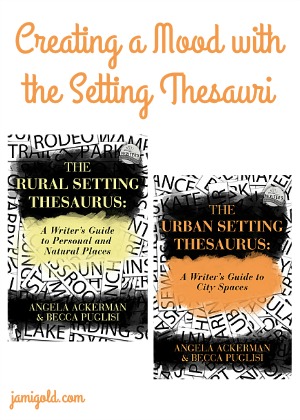
The Thesaurus books by Angela Ackerman and Becca Puglisi are a must-have for every fiction author, and they now have two new Thesauri books: Urban Setting and Rural Setting. Becca’s here today to talk about how setting is important for more than just describing the time and place of our scene.
Pin It
Read More
The learning curve we face when deciding to become a writer is always longer than we think because we don’t know what all we don’t know. So how can we track our progress? How can we tell whether we’re improving? How can we feel good about our writing?
Pin It
Read More
When we first start off as writers, if someone asks us about our story, we might launch into an overview of our story’s plot. It’s easy to think the plot is what our story is about. But with few exceptions, story isn’t the same as plot.
Pin It
Read More
Sometimes as authors, we struggle to create a well-rounded world or characters that feel so real to readers that they experience a movie in their mind. Stories that feel like we can crawl in and inhabit them are often lauded as special, but why is it so hard to succeed in that goal?
Pin It
Read More
Aphantasia is the term for when someone can’t imagine something in their mind–“mind blindness” or not having a “mind’s eye.” As writers, this perspective not only gives us all sorts of story and character ideas, but it can also raise many questions about the concept of imagination itself.
Pin It
Read More
To create a great emotional story, we need to know not only the vocabulary of describing emotions, but also how we can evoke emotions in our readers. Marcy Kennedy’s here to show us how deep point of view can help us evoke those emotions we want within our readers.
Pin It
Read More
From school, we’re probably all familiar with using topic sentences to break ideas into paragraphs in non-fiction, but the rules are different for fiction. Choosing where to put paragraph breaks is one of the most voice-dependent decisions we can make as writers.
Pin It
Read More