Plotting Tip: One Simple Step to Ensure Our Story Works
Either plot events affect the character and the story, or they don’t. If we understand the difference, we can learn what to look out for and know how to fix any problems.
Pin It
Where Normal Need Not Apply
Either plot events affect the character and the story, or they don’t. If we understand the difference, we can learn what to look out for and know how to fix any problems.
Pin It
Most of yesterday was spent with me biting my nails while waiting for news on my brother’s brain surgery. But that brought to mind how hard waiting can be, so I want to take a minute to recognize all the ways we wait, as writers, and hope that things beyond our control go our way. Believe me, I feel your pain. *smile*
Pin It
At their essence, most sports have a lot in common with storytelling. There are “good guys” (the home team) and “bad guys” (the visiting team), and they battle for who comes out on top. The audience becomes emotionally involved and roots for those they identify with to succeed, and we […]
Pin It
Every story beat or turning point scene—when events affect the main story question, conflict, or goal—needs to be included in a story. But what about non-turning-point scenes? How can we tell when to include them and when we can skip ahead?
Pin It
Threats and obstacles can develop the plot and increase the tension in our story, but they’re not necessarily the same thing as stakes. So let’s talk more about what it means to amp up the stakes in our story.
Pin It
Today’s “Ask Jami” came from a comment on my Romance Beat Sheet post. Nick wanted to know how a story’s structure would change if the romance is forbidden. Ooo…
Pin It
If we write our story well, every aspect of the story will contribute to the overall picture and create an impression for the reader. There aren’t any unimportant details in a well-written story. And that means the careers for our characters shouldn’t be an afterthought either.
Pin It
Want to avoid flat, unemotional writing? We have to match our characters’ emotional reactions to the stimulus, whether big or small.
Pin It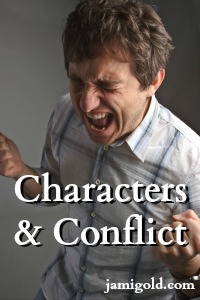
All stories need conflict. As agent Donald Maass says, we need tension on every page. But that doesn’t mean our characters should come to fisticuffs on a regular basis. Instead, conflict refers to whatever stands between our characters and what they want. Why does it take them 300 or so […]
Pin It
We’re probably all familiar with the idea that poetry, music, and song lyrics can have rhythm. But prose writing—our normal, everyday writing with sentences and paragraphs rather than lines, stanzas, and verses—can have a rhythm too. I’d occasionally heard a rhythm in my head while reading stories but never paid much attention. […]
Pin It


